Coping with Burnout: Therapist’s Review of “Burnout: The Secret to Unlocking the Stress Cycle”
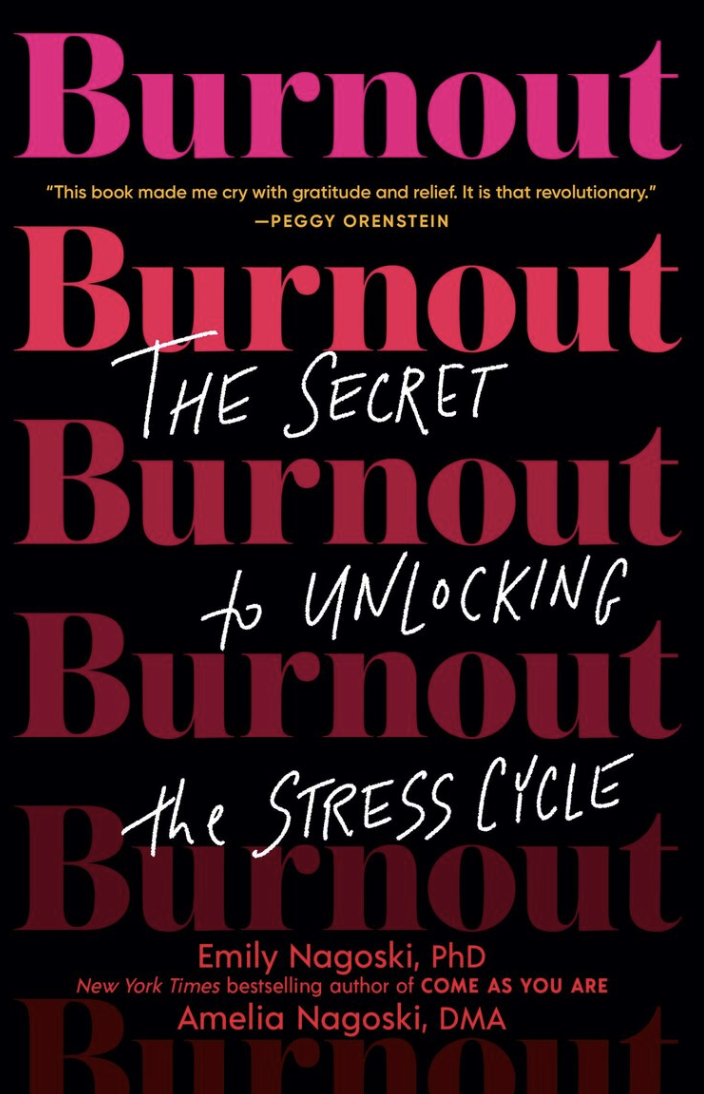
"Burnout: The Secret to Unlocking the Stress Cycle" by Emily and Amelia Nagoski is one of the books I recommend to most of my female clients since the themes of stress and burnout are quite prevalent, especially for women. The Nagoski sisters combine their expertise in health education and music to craft a narrative that is both scientifically informed and deeply empathetic. They provide practical steps you can take to recover from burnout as well as to prevent it from happening in the first place. The book walks you through how to weave in radical acceptance and self-compassion into your daily life along with practical goal setting and ways to increase meaning in your life.
Core Themes and Insights
At its core, "Burnout" explores the physiological and psychological mechanisms of stress. Emily and Amelia describe the stress response cycle and emphasize the importance of completing this cycle to effectively manage stress. They also tackle the often-neglected aspect of emotional exhaustion that accompanies physical and mental strain.
A key insight from the book is the differentiation between the stressors (external events causing stress) and the stress itself (internal response). They eloquently argue that while we might not always have control over stressors, we can manage our reaction to them. This is at the core of radical acceptance and the recognition that pain in life is inevitable, but we have control over how we respond to it. Oftentimes, refusal to accept reality and instead getting swept away by “shoulds” and “what ifs” leads to worsening symptoms of anxiety and depression.
How to Complete the Stress Response
What sets "Burnout" apart is its blend of scientific research with compassionate understanding. The book is peppered with personal anecdotes, making it relatable. The authors' approach is not prescriptive but rather suggestive, offering various strategies that readers can tailor to their unique circumstances. For example, the authors identify the following strategies to complete the stress response, so our bodies don’t get stuck in a state of perpetual stress:
Move your body - take a walk, jog in place, do jumping jacks - anything to get the blood flowing in your body.
Breathe - breathe in for 5 counts, hold for 5 counts, exhale for 10 counts, hold for 5 counts, repeat 3 times. Another variation that I love is square breathing - breathe in for 4 counts, hold for 4 counts, exhale for 4 counts, repeat 4 times.
Engage in positive social interactions - it could be as small as holding the door open for someone at the store, thanking the coffee barista or giving someone a compliment.
Laugh - share a funny meme with a friend, look up a funny video.
Engage in affection - research has shown the transformative effects of engaging in a 6-second kiss or hugging someone for 20 seconds. Next time you hug your partner/child/friend, notice how you felt before and after.
Give it a cry - for many, crying is viewed as a sign of weakness when it fact it can be quite liberating.
Engage in creative expression through art or music to release emotions from your body.
Addressing the Gender Gap
The book stands out for its in-depth exploration of the gender gap in stress and burnout experiences. Emily and Amelia delve into how societal norms and expectations disproportionately amplify stress levels in women. This heightened stress is often a result of multifaceted roles that women are expected to play – as professionals, caregivers, and societal contributors. The Nagoskis don't just stop at identifying the problems. They go a step further to offer solutions that address the unique challenges women face in stress management.
The book highlights the often invisible emotional labor that women do, which significantly contributes to their burnout. This includes the expectations to constantly manage and prioritize the well-being of others, often at the cost of their own mental health. The Nagoskis emphasize the importance of recognizing these patterns and suggest practical strategies for women to set boundaries and advocate for their own needs.
Moreover, "Burnout" addresses the critical aspect of societal pressure on women to perform and excel in all areas of life, leading to a perpetual state of stress and inadequacy. The authors encourage women to redefine personal success and detach self-worth from societal benchmarks. They advocate for a more compassionate approach towards self-evaluation, urging women to embrace their accomplishments and learn from their challenges.
The Nagoskis also tackle the stigmatization of mental health issues among women, emphasizing the need for open conversations and support networks. They suggest building communities where experiences can be shared without judgment, fostering an environment where seeking help is normalized rather than stigmatized.
Conclusion
"Burnout" is not just a book; it is a guide to better understanding ourselves and managing the stress that permeates our lives. Emily and Amelia have written a book that’s a call to action for women to prioritize their mental health and wellbeing, offering a path towards a more balanced and fulfilling life.
If you found these strategies helpful and need further assistance, feel free to reach out with any questions or to schedule a 20-min complimentary consultation.
Veselina Hristova Jones, LICSW, is a Boston-area therapist based in Wellesley, MA, who specializes in anxiety, depression, and relationship issues. She provides compassionate, evidence-based therapy to adults across Massachusetts through secure online sessions, as well as in-person therapy for clients in Wellesley, Newton, Weston, Needham, Natick, and Framingham.